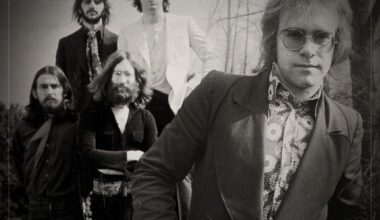
Before The Beatles, John Lennon’s skiffle band, The Quarrymen, raised the roof at various village fêtes, fairs and functions. A 16-year-old Lennon established this formative group in 1956 with some friends from Quarry Bank High School in Liverpool, hence the name. They were initially, very briefly, called the Blackjacks, but this was changed early on.
In 1957, Lennon met a 15-year-old Paul McCartney at St Peter’s Church Hall fête in Woolton. The pair got on like a house on fire with a side order of kerosene; it was only a matter of time before McCartney was inducted as a Quarryman, initially as a rhythm guitarist. The pair found chemistry as friends and songwriters as Lennon invited the new recruit to jam at his house, where he lived with his aunt, Mimi Smith.
In early 1958, McCartney invited his younger friend Harrison to watch his new band play. Harrison subsequently auditioned in front of Lennon, and although impressed by the young lad’s talent, he had reservations about the guitarist’s age. Harrison was nearly three years younger than Lennon, and while it seems odd that such a trivial detail should impact the dynamic between the pair, it affected Harrison for the rest of his life.
Thankfully, Lennon agreed to welcome Harrison after a couple more trials and by 1960, and they were reborn as The Beatles. At this point, Lennon, McCartney and Harrison were joined by Stuart Sutcliffe on bass and Pete Best on the drums.
After a run of temporary drummers, Best joined the band in August 1960 and played with them through their early rise to national acclaim. In January 1962, aspiring businessman Brian Epstein became The Beatles’ manager, who, by the following month, had wrangled them a recording contract with George Martin of EMI. As the band began their initial recording sessions later that year, it was reported that Martin and the band felt Best’s drumming wasn’t up to scratch for studio work, and he was fired. As The Beatles welcomed Ringo Starr, the drummer from Rory Storm and the Hurricanes, a cohort of Best’s fans felt their favourite Beatle had been duped.
A variety of accounts suggest different reasons for Best’s expulsion. Some claim that Best was as good as Ringo, if not better. Instead, it was frequently opined that Best had been sacked because of his comparative good looks compared to the other band members. As the Mersey Beat magazine reported at the time, The Beatles stated: “Pete left the group by mutual agreement. There were no arguments or difficulties, and this has been an entirely amicable decision.”
Alas, the mag claimed: “This official Beatles’ comment, issued by Brian Epstein, was false. Pete was to tell Mersey Beat: ‘The news came as a big surprise to me as I had had no hint that if could happen and didn’t even have the opportunity of discussing it with the rest of the group.’”
“Local fans went wild with fury and hundreds of letters and petitions of protest were sent to Mersey Beat,” the article added. “When the Beatles were due to appear at the Cavern with Ringo on Sunday 19 August 1962, the Best fans were out in force. Ray McFall arranged for Brian Epstein to have a bodyguard and, during scuffles, George Harrison was given a black eye by Bruno, a Best fan. Fans were chanting ‘Pete for ever, Ringo never’ and ‘Pete is Best.’”
As The Beatles returned to the studio for their first sessions in earnest with the now-classic lineup, Harrison sported a shiner. While we’ll likely never get to the bottom of the Best-Ringo debate, the decision’s divisiveness could partly explain the age-old derision targeted at Ringo and his drumming ability.