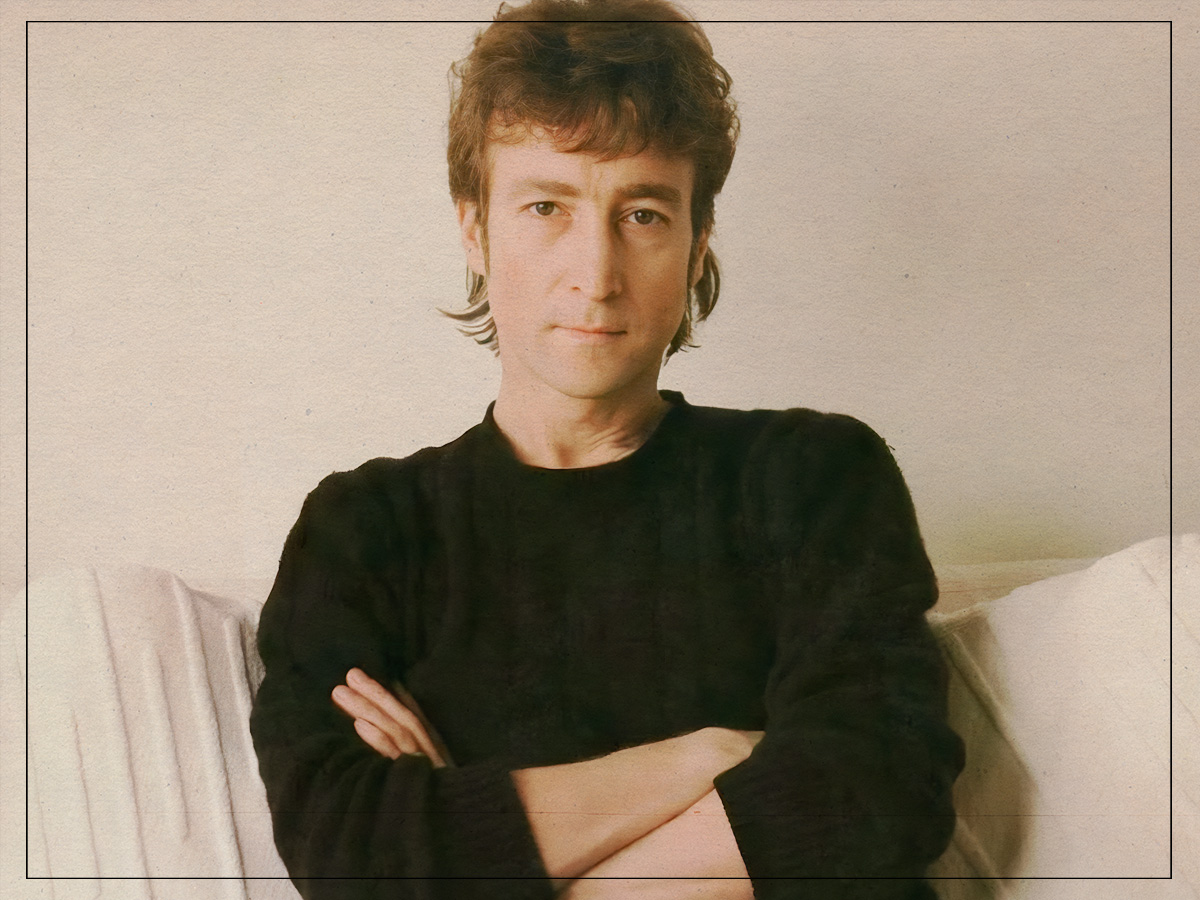
I just have to come out and say it – ‘Imagine’ by John Lennon is a terrible song. It’s too simple and shallow, and has it ever actually achieved anything worth noting towards creating peace?
OK, now that I have your attention, let’s just get some things straight. Lennon and Yoko Ono – who is often entirely overlooked when it comes to her writing credit on ‘Imagine’ – most obviously had the best of intentions with its sentiment. The former Beatle had cultivated a whole brand for himself as far as advocating for a more peaceful and tolerant world, and the song is clearly the most powerful vehicle left in his legacy to express that.
But even when taking all of that into account, it still doesn’t mean that ‘Imagine’ should be hailed as representing the pinnacle of Lennon’s work, or even come close to being it. Taking an assessment from a purely lyrical perspective, the song would hardly gain him a top grade, having previously known what he was capable of. “Imagine there’s no heaven/ It’s easy if you try/ No hell below us/ Above us only sky” – was he actually being serious?
Of course, there is no point in stating the obvious: I am very much aware that the song was meant to be simple, with an accessible heart to make Lennon’s desired sentiments understandable to the entire world, from the youngest babe in arms to those who don’t even speak the same language. That’s fine to appreciate, at least in principle.
Yet it still doesn’t truly counter the point I am trying to make, which is that despite its simplicity, there are far better Lennon songs which take the same approach but convey a much more meaningful message. Just use ‘Across the Universe’ as the most pertinent example. Sure, it was an effort attributed to The Beatles, but given that it landed so close to the end of their tenure when relations between him and the rest of the Fabs were so tense, it was essentially composed as a solo track as much as any of his others.
As someone whose childhood pulsated to the sound of The Beatles, for too long I assumed, via my parents’ guidance, that the peak of music was reached in songs like ‘Hey Jude’, ‘Yesterday’, or ‘Let It Be’. Yes, of course, each of those are classics in their own respective rights, yet their reputations often cover up the true Beatles gems. It wasn’t until much later in life, when getting to explore the band’s back catalogue to suit my own tastes, that I truly unearthed ‘Across the Universe’ – and suddenly, everything fell into place.
It enchants you from the very opening line – “Words are flowing out like endless rain into a paper cup,” and wraps you in its stratospheric journey through every syllable and note from there forward. To take the case of the aforementioned image, is it any more complex than those presented in ‘Imagine’? Definitely not; the words themselves are simple, and you can easily envision that picture in your mind.

But the quintessential difference is that they are so much more evocative. In one seemingly straightforward sentence, it expresses ideas on love, sadness, identity, perspective, and so much more. By comparison, ‘Imagine’ is asking you to picture one very basic, romanticised notion. In some ways, it almost loses feeling and becomes hard to relate to because it just seems so far removed from the reality of the world we have always faced.
Conversely, in the way ‘Across the Universe’ leans into its romanticism and rockets you to somewhere completely different to the Earth, it takes on a spectral universality. The “images of broken light which dance before me like a million eyes” and thoughts that “meander like restless wind inside a letterbox” command your attention because they invite you to consider certain ideas on your own terms, not instruct you to think of one rigid ideal.
Indeed, as you reach the end of ‘Imagine’, the essence of the very word itself has begun to fall by the wayside after it has been shoved down your throat so many times. There’s only so much that one is able to conjure up in their minds without giving them the space to explore those notions themselves, and Lennon’s words in ‘Imagine’ are rather concrete.
“Imagine there’s no countries/ It isn’t hard to do/ Nothing to kill or die for/ And no religion too.”
The fact is that, whether Lennon or any of his greatest followers liked it or not, he was no messiah. Imploring people to take heed of a message is one thing when you make the intent crystal clear, but there was no way on Earth that society could ever be void of the things he was so set on eradicating. The world is simply too complex to ever get on board that particular peace train.
Contrastingly, the phrase “Jai Guru Deva Om” in ‘Across the Universe’ – roughly translated as “All glory to the great divine teacher” – may be more keenly spiritual in its meaning, but is communicating from the same hymn sheet, if you will. As humans, we are all on a journey to find peace in one way or another – as our own people, in politics, or in the vast scale of the world – but whether you choose to take a more objective or expansive approach to achieving that goal may set a limit on what you can ultimately achieve.
See this as my case to say that ‘Imagine’ and ‘Across the Universe’ have the exact same symbolic message: peace. Lennon, of course, understood that fundamentally in everything he did, but to produce something so nullified in his own solo career, after essentially saying that contentment can be found even in the furthest corners of the stars alongside The Beatles, is somewhat disappointing.
Maybe that actually speaks volumes about Lennon as a man himself. Despite the juxtaposing frustration and discontentment that the band brought him in its later days, it was ultimately the key in unlocking the limitless potential of his artistic mind.
What he thought he needed in that moment was to break free, but with the peace of his own life only lasting a few short years from that point, it is perhaps telling that his sentiments became more and more devoid without the strength of his bandmates to lift him into the stratosphere.