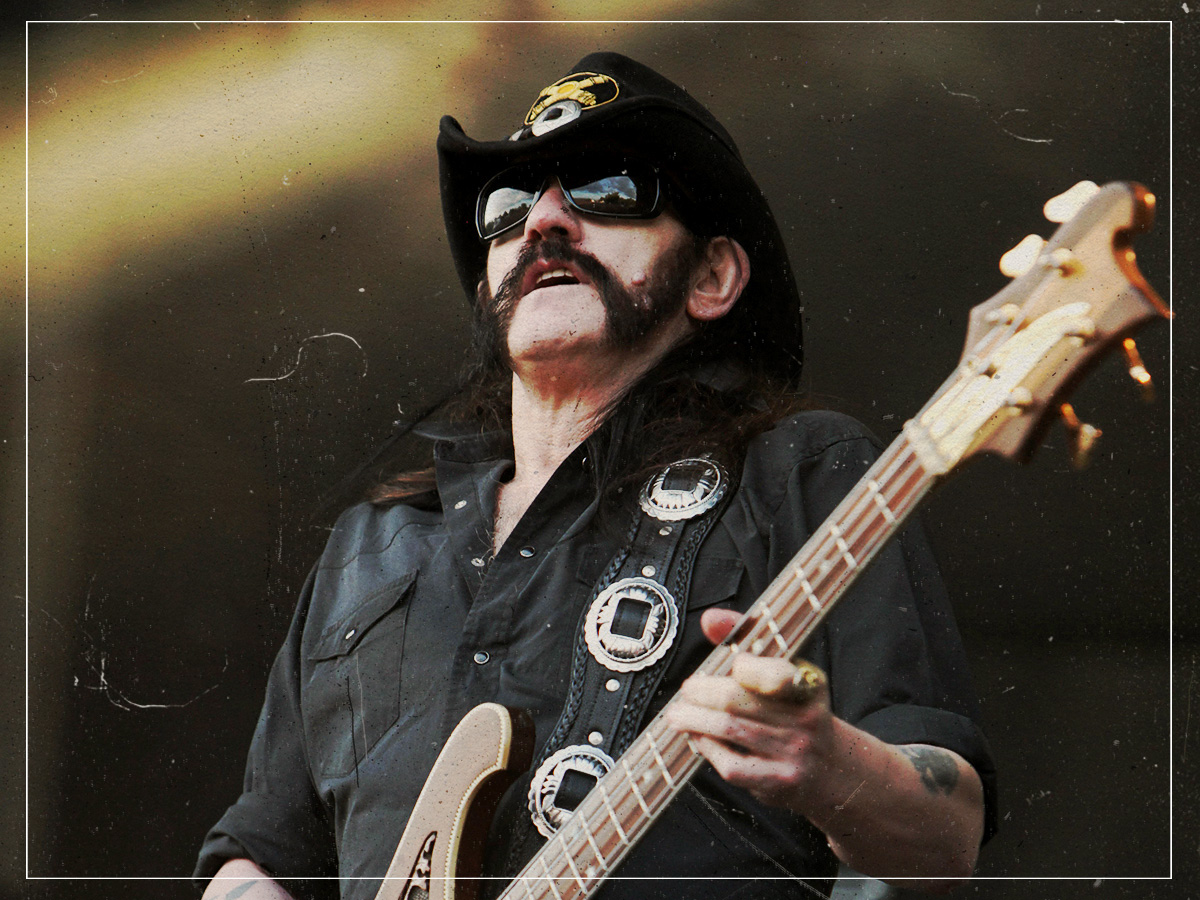
Attempting to plot culture on any clear timeline is almost impossible. There are things that are unquantifiable and never come down to a set moment or a set date. There’s no mark on the calendar to be found for the birth of rock and roll, but according to Lemmy, the way it developed and the sound that took over, makes perfect sense.
He was right. While the origins of a genre can never be accurately marked down, the way things morph and change can be plotted, but only in line with other surrounding contexts. So let’s think about rock and roll for now, and in that, I want you to picture a boulder on a hill.
For decades upon decades, people were attempting to push that giant rock up a steep terrain. That represents the start of it all: when country and blues were merging, when different cultures were playing with different sounds and when this music wasn’t on the radio yet, even as more and more artists were striving to garner attention for it.
Then they hit the peak: Elvis Presley, The Beatles, Jimi Hendrix, The Doors, The Rolling Stones, Led Zeppelin, the entire class of the 1960s. That mountaintop is the Woodstock era, the height of counterculture, the hazy days of the peace and love era, where so many legends were made. Then, the boulder tipped over the edge.
There are plenty of theories about what that significant push was. According to Joan Didion, it was the Manson Family murders. Some say it was the deaths at Altamont. Many would claim it’s the nature of physics that what goes up must come down, demanding that the hippie hedonism would eventually have to have consequences and, in turn, darken. The impact of drugs was taking hold in insidious ways, most casualties being lost idols who were dying, and even in politics and economics, things were worsening.
Musically, that makes a lot of sense. After the 1960s, things got heavier. The boulder is now rolling down the hill through darker, woodier ground with heavier guitars, angstier lyrics and darker experimentation. It’s rolling and changing and, according to Lemmy, what that boulder of rock and roll became was heavy metal, naturally morphing from one to the other.
“So called heavy metal, whatever you want to call it, I call it rock and roll, it is the logical successor to original rock and roll,” he said as if the heavier sound was always going to be the natural heir to the throne.
But along with the more socio-economic arguments historians might pull out, Lemmy’s case was more animalistic. “If Eddie Cochran was like 18 now, he’d be in a garage with the band playing a Les Paul copy from Japan, you know, that’s what he’d be doing because it’s the same urge to make a loud noise, to piss your parents off and to get laid,” he said, as if music always comes down to base urges.
Heavy metal appealed to the same ones, but it had a new makeup that seemed more fitting for a less optimistic world. “This is the scabby bastard child of rock and roll,” Lemmy declared, and that’s why he got involved, adding, “That’s why I like it. That’s why it’ll always come back, they’ll never get rid of it.”