Growing up, Bruce Springsteen had a “dreamy insecurity” about him that clashed directly with his father’s hardened exterior, preluding a years-long internal conflict he eventually navigated in his music.
Part of what always made Springsteen an effective cultural touchpoint for many Americans was his ability not only to reflect the loopholes in a fragile system but also to bring his own experiences into them, representing and reflecting working-class values in towns where they were quickly being displaced by the disillusionment that comes with modern Republican disconnect.
For many, Springsteen’s journey began here: in the harsh folds of a reality built to tear the small people down without giving them a fighting chance. For Springsteen, it began at home, in the jagged lines of a family dynamic that made him question everything.
“Weirdo sissy-boy. Outcast. Alienated. Alienating. Shy. Soft-hearted dreamer. A forever-doubting mind. The playground loneliness,” Springsteen wrote in Born to Run, recalling how he felt his father perceived him as a boy.
“[I had] a gentleness, a timidity, shyness, and a dreamy insecurity,” he continued. “These were all the things I wore on the outside, and the reflection of these qualities in his boy repelled [my father]. It made him angry.” His mother, on the other hand, was “kind” and “compassionate”, traits his father saw in his own son, traits he’d tease him for because he wasn’t more like him instead.
But it was the kind of complicated heartbreak that signalled a specific journey for Springsteen, a journey of self-discovery and solitude (and idolising flawed heroes) with a goal to find somewhere where it all made sense behind the microcosm of his own house.
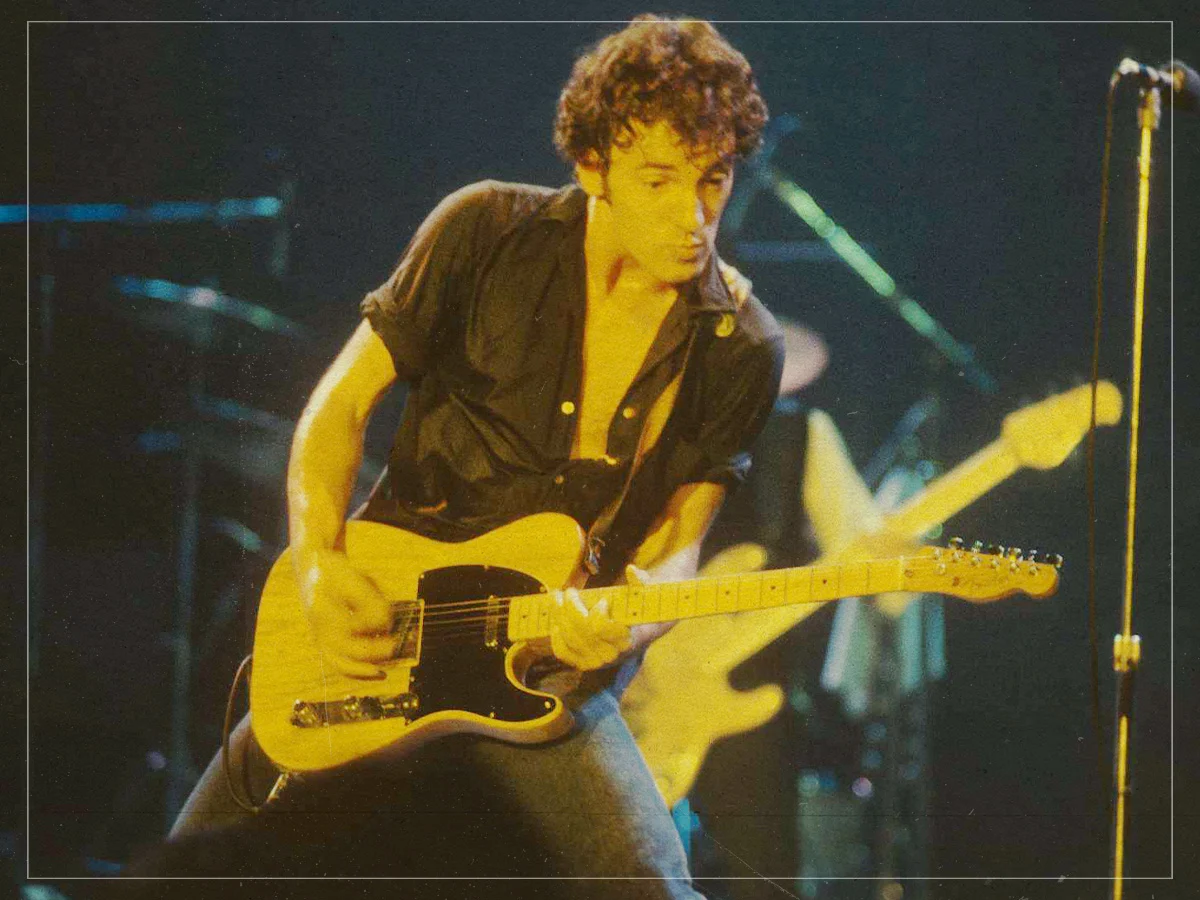
Bruce Springsteen – Philly – Neal Preston
(Credits: Neal Preston)
“He was very dismissive of primarily who I was,” Springsteen explained to Esquire. “And that sends you off on a lifelong quest to sort through that.”
Part of that lifelong quest was Nebraska. With songs like ‘My Father’s House’, ‘Used Cars’ and ‘Mansion on the Hill’, Springsteen aired the discrepancies of his childhood through the music, pulling from the various threads of what he knew to be the son to a temperamental and oftentimes toxic father, figuring himself out with two parents on opposite sides of the sensitivity spectrum.
But this was all part of building out his artistic expression and figuring out the beauty of blending personal experience with cultural resonance. Springsteen wasn’t just using his music as a means to expose the country from a proletariat perspective; he was doing it from a very authentic, very real familial lens, pouring neglect and despair into his songs to both lay his soul bare and establish where he lies in the rubble of it all.
“When I was a child, and into my teens, I felt like a very, very empty vessel,” Springsteen told Esquire. “And it wasn’t until I began to fill it up with music that I began to feel my own personal power and my impact on my friends and the small world that I was in. I began to get some sense of myself. But it came out of a place of real emptiness.”
“I made music for that kitchen,” he continued. “Go to Nebraska and listen to it. But I also made music for my mother’s part of the house, which was quite joyful and bright. You have to put together a person from all the stuff that you’ve been handed.”
That said, the beauty of Nebraska and Springsteen’s entire legacy wasn’t in how he shunned his father’s traits; it was how he also adopted some of them to make a point, like his clothing and attire and the way he seemingly represented the all-American dream while being a deeply fractured soul. Perhaps that’s the key to understanding Springsteen’s position in his own pool: black and white thinking doesn’t reveal true colours as much as considering the nuance and intricacy of a ruptured system does.
As the singer put it: “My father was my hero, and my greatest foe.”