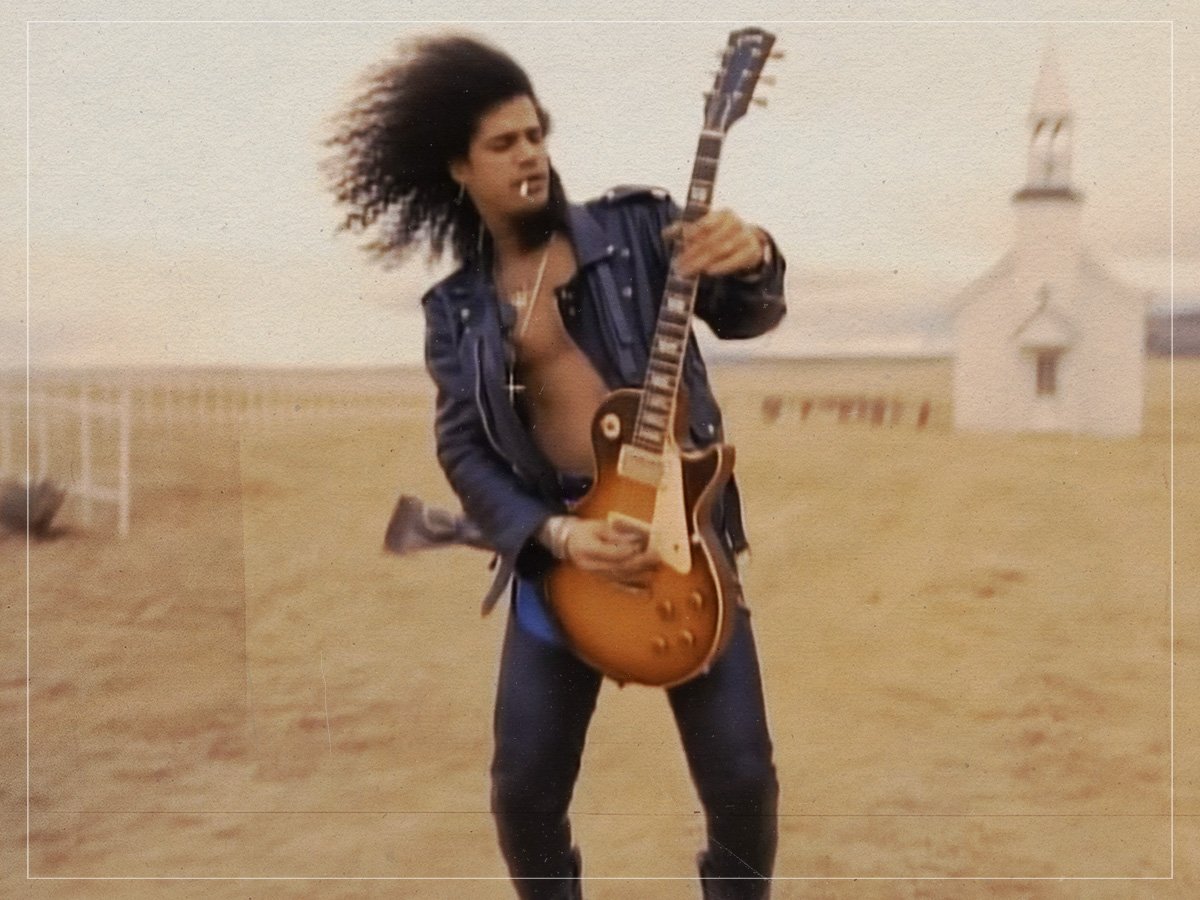
The mercurial guitarist Saul Hudson is better known to his fans and everyone else who hasn’t been living under a rock as the one and only, Slash. One part of the generation-defining band Guns N’ Roses, Slash also found fame as one of his era’s greatest guitarists of all time. As able to deliver magnetic solos as he was powerhouse riffs, the six-string maestro soon became a generation’s defining guitar hero.
A swashbuckling performer capable of melting your mind and turning sane people into lose-their-shit fans within a few licks. However, like all musicians, it didn’t all happen by accident. Slash had to dedicate himself to the craft and would achieve his unbridled success through the meticulous practice it takes to master his instrument. But he also needed inspiration, and while there were certainly some non-guitarists who would have influenced Slash, it was the commanders of the six-string that truly grabbed his attention.
By the end of the 1980s, the rock scene was in dire need of an upgrade. Although the start of the hair metal scene in Los Angeles seemed promising in the late 1970s, it had sorely overstayed its welcome by the end of the following decade, with bands like Winger playing songs that were a bit too on-the-nose for fans to take seriously anymore. Though Guns N’ Roses may have been lumped in the same category, Slash wasn’t looking to play the traditional rock guitar scales.
Compared to the virtuosic playing happening around the same time, Slash dug deep into rock history to get to the root of what he loved. Influenced by everyone from Joe Walsh to Joe Perry to Eric Clapton, much of the guitar playing on the band’s debut release, Appetite for Destruction, was completely fresh for the time, featuring Slash’s rapid-fire leads on tracks like ‘Paradise City’.
When working on his signature sound, though, Slash also had to compete with some of the biggest names on the local scene. Ever since the late 1970s, artists like Randy Rhoads were still being held in high regard behind the fretboard, with fans looking to create songs that were indebted to the classical style of playing.

While Slash was never interested in the classical side of the instrument, he was shocked when listening to Van Halen’s debut for the first time. Before any of the hair metal mainstays had started, Eddie Van Halen was already rewriting the rules for what a guitar god was supposed, helping popularise the idea of tapping with one’s strumming hand on the fretboard to create insane runs of notes.
Even though Slash never claimed to play in the same style as Eddie, he admitted that he had to respect his attention to detail in his craft. Throughout Van Halen’s development, Eddie approached the instrument similarly to Slash, creating melodic hooks rather than using his instrument as an excuse to show off on tracks like ‘Hot For Teacher’ and ‘Eruption’.
When talking about the other guitar competition that the world had to offer, though, Slash thought no one could come close to what Eddie did, saying, “When I started getting into guitar playing, everybody was trying to emulate Eddie, and they were all sort of focusing on the obvious techniques and the fucking finger tapping and the harmonics and the tremolo bar stuff. But the way that he did it was such a part of his personality, and it was such a part of his melodic sensibility that it had this sort of musical fluidity that nobody after that really ever came close to playing that style of guitar playing”.
Although Slash may have been able to concentrate on that style of playing if he wanted to, his bluesy delivery helped him stand out amongst the pack in Guns N’ Roses’ early days, almost being an answer to Jimmy Page than Eddie.
Regardless of how many artists may have tried to out-tap the master, Slash still maintains that all of the magic behind Van Halen came from Eddie’s heart rather than his technical flash.