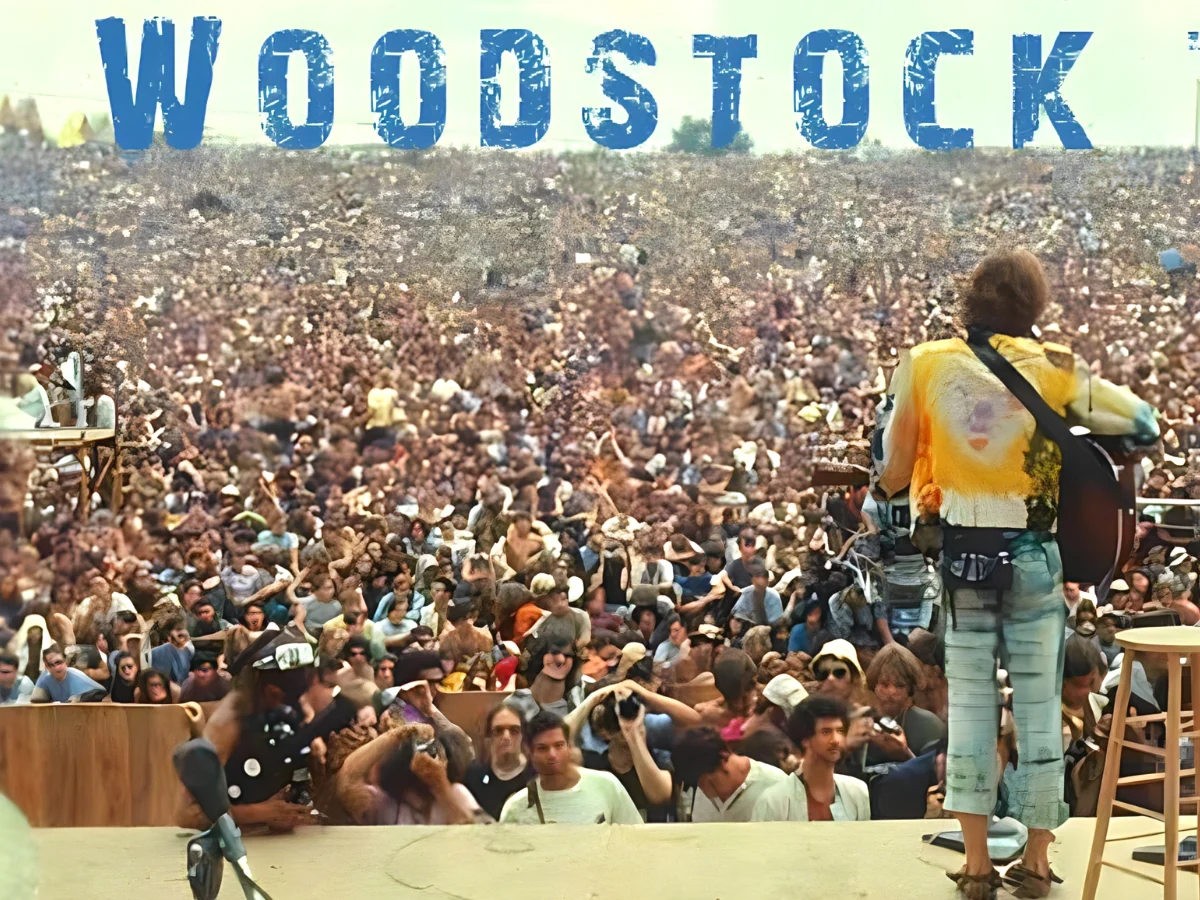
In 1969, the summer of love was unfolding in a historic way, changing the course of liberal consciousness one song at a time, but it was important that it was marked with one seismic moment. And in Woodstock, that was provided.
Long before cowboy boots and selfie sticks, this eastern American escape was culturally aligned with the essential idea of what a festival is, a place where music was at the heart of libertarian resistance.
There are many reasons it’s gone down in history. Obviously, the year in which the whole bloody thing took place has a large part to do with it, but more importantly, it was the performances involved. Jimi Hendrix, The Who, Santana, Janis Joplin, Sly & the Family Stone, Jefferson Airplane, Joe Cocker, and Crosby, Stills, Nash & Young all contributed to a monster bill that celebrated the very best music of that era.
Such was the power of left-leaning movements at the time that over 400,000 attendees turned up to the festival, and in keeping with the communal sentiment, most of them did so for free.
The cost of an advanced ticket was $18, of which they sold 180,000, but when word soon spread of the event, an extra 220,000 open armed music fans turned up with a smile on their face and hope in their heart. For good reason of course, as their arrival was met with little to no resistance as the organisers simply couldn’t organise the infrastructure to charge these latecomers.

All of these aforementioned reasons have swirled around in recent years, creating an event steeped in romantic mythology. Joni Mitchell of course heralded the event in her song ‘Woodstock’ singing, “I’m gonna camp out on the land / I’m gonna try an’ get my soul free,” while Crosby Stills Nash and Young celebrated the event singing, By the time we got to Woodstock / We were half a million strong / And everywhere was a song / And a celebration”.
So, Woodstock has since become more than a festival, it’s become a symbolic name for freedom and artistic liberation. Even though the festival was never even held in Woodstock.
So, where was Woodstock 1969?
Well given the fact Woodstock was so rooted in anti-establishment attitudes, it’s unsurprising that it encountered pushback. And the very first problem it had to overcome was that of its venue.
Organisers under the name Woodstock Ventures pinpointed the north eastern venue as an appropriate home for this counterculture event, given the fact that in the early 20th century, Woodstock had been the home of the Byrdcliffe artist residency program, burgeoning some of the best writing, visual art and music the country had to offer.
“There was a whole series of classical music concerts called the maverick concerts, which started in a woodland section called Chapel in the Woods,” Mike Evans, co-editor of Woodstock: Three Days that Rocked the World, explained.

He added, “By the time the rock-and-roll communities heard of Woodstock, it was already established as a kind of Bohemian art centre.”
But given the more expansive and high profile nature of the festival plans, local residents of the town expressed their concern in the form of an outright refusal, and the grand idea of rekindling Woodstock’s artistic legacy was scrapped.
From there, the organisers moved it to a town just ten miles from Woodstock, where it received the same complain before finally landing on Walkill. At 35 miles south of Woodstock, it hoped it would neutralise the noise complaints and still keep it within touching distance of the great town so it could use its name.
A month before its scheduled date, on July 15th, July 15, the town official rescinded its permit for the Woodstock festival, on the basis that its portable toilet facilities didn’t meet the city’s standards. So upon that news, the organisers finally found their last venue about 90 minutes from Woodstock itself, called Bethel. Nevertheless, the organisers ensured their dream was actualised and kept the original name of the festival, which cultural history has shown was perhaps the right decision.