Where The Beatles launched the first rocket of a so-called British invasion with their teeny-bopper rock ‘n’ roll, The Rolling Stones simultaneously broke through with a mysterious twist.
Unfairly pitted against each other from the beginning, “The Beatles v The Stones” was perpetuated by ravenous teens who split their fandoms into two worlds at war. Critics, alike, defined their tastes by resonating with either The Beatles’ pop-rock melodies or The Stones’ classic blues-driven sound. Even as both groups ventured into more expansive realms and esoteric frames of thought, one was either a Beatles fan or a Stones fan, with no room for tiptoeing the line drawn between them.
These conventions did not persist between the bands themselves – at least, not too often. The two met just as The Stones were beginning, eventually featuring on each other’s music: John Lennon and Paul McCartney sang (uncredited) backing vocals on two songs from The Stones’ album, Their Satanic Majesties Request, ‘Sing This All Together’ and ‘We Love You’. In turn, Mick Jagger and Keith Richards appeared on a telecast performance with The Beatles, singing ‘All You Need Is Love’.
George Harrison even helped The Stones secure their first record deal, but still, the two bands remained on shaky ground with one another, particularly after an interview Lennon gave with Rolling Stone magazine in 1970, where he asserts that The Stones’ Satanic Majesties is a blatant rip-off of The Beatles’ Sgt Pepper.
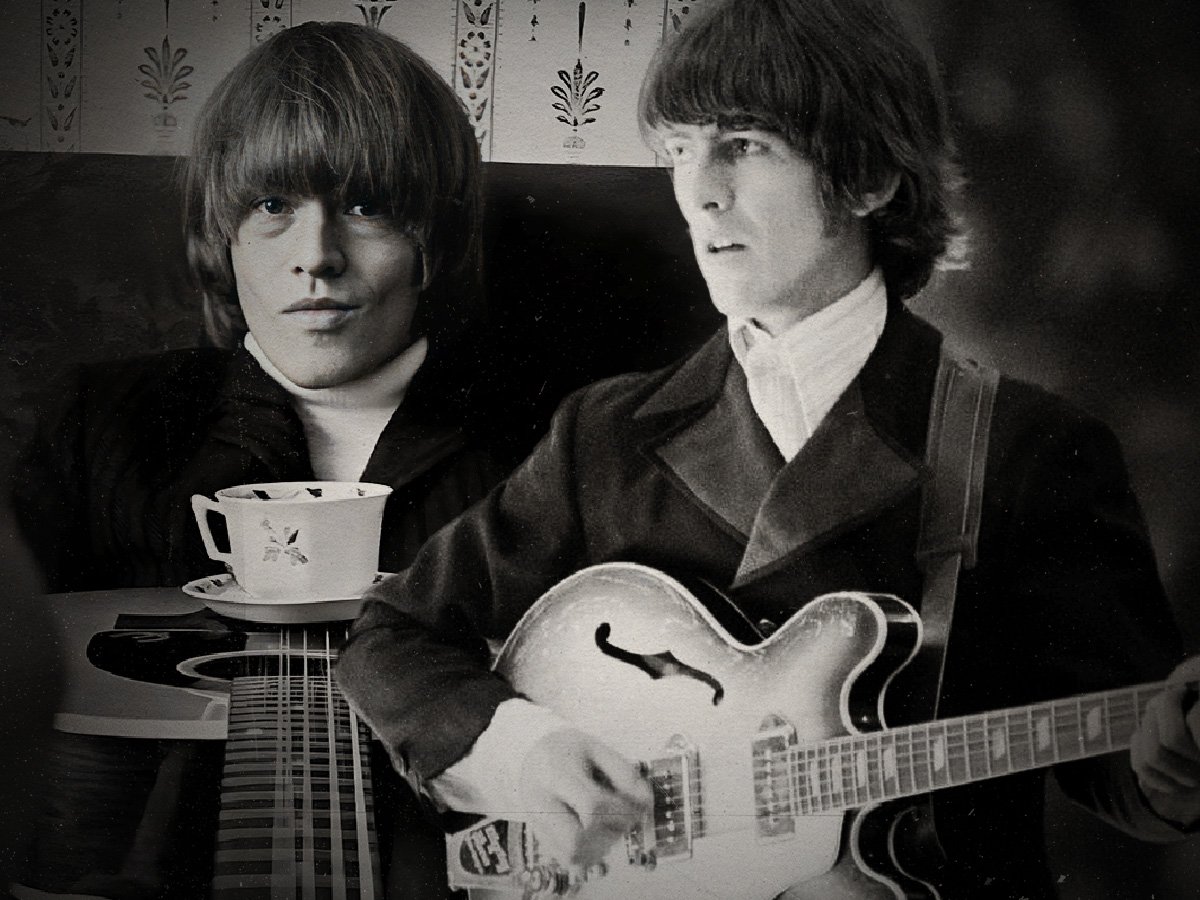
Still, a sort of “frenemy” relationship continues to the present day, with the two bands acknowledging a mutual admiration. Much of The Beatles’ appreciation for The Stones stemmed from the genius of the late Brian Jones. Jones, initially the de facto “leader” of The Stones, became slowly outshined by Jagger and Richards’ songwriting duo, his own talents left by the wayside. The Beatles, then, recognised a certain sadness in the guitarist that permeated his position in his band. They’d been working on an unfinished song, beginning during their Magical Mystery Tour sessions, and invited Jones to contribute.
In Barry Miles’ book Many Years From Now, McCartney recalls Jones arriving at Abbey Road Studios, wearing his customary large Afghan coat and shaking, as he smoked multiple cigarettes. Expecting him to show up with his guitar, Jones, instead, surprised everyone with a saxophone. “He opened up his sax case and started putting a reed in and warming up, playing a little bit,” McCartney remembered. “He was a really ropey sax player, so I thought, ‘Ah-hah. We’ve got just the tune.’”
The song, ‘You Know My Name (Look Up The Number)’, became a sort of comedy record, and the B-side to ‘Let It Be’. Jones passed away nine months before its release.
Following Jones’ premature death at the age of 27 in 1969, Harrison wrote about his memory of the fellow guitarist in a newspaper, recognising a sort of kinship between the two of them. “When I met him, I liked him quite a lot,” Harrison recalled. “He was a good fellow, you know. I got to know him very well, I think, and I felt very close to him; you know how it is with some people, you feel for them, feel near to them.”
He notes how they were born just three days apart, before he continued: “He was with Mick and Keith, and I was with John and Paul in the groups, so there was a sort of understanding between the two of us. The positions were similar, and I often seemed to meet him in his times of trouble.”
Heartbreakingly, Harrison asserted, “There was nothing the matter with him that a little extra love wouldn’t have cured. I don’t think he had enough love or understanding. He was very nice and sincere and sensitive, and we must remember him like that because that’s what he was.”
Evidently, Harrison showed a kindness towards Jones that, unfortunately, became a rarity before his death. His remembrance of the guitarist is a sweet testament to Jones’ legacy, one that surely defined The Stones for decades to come.