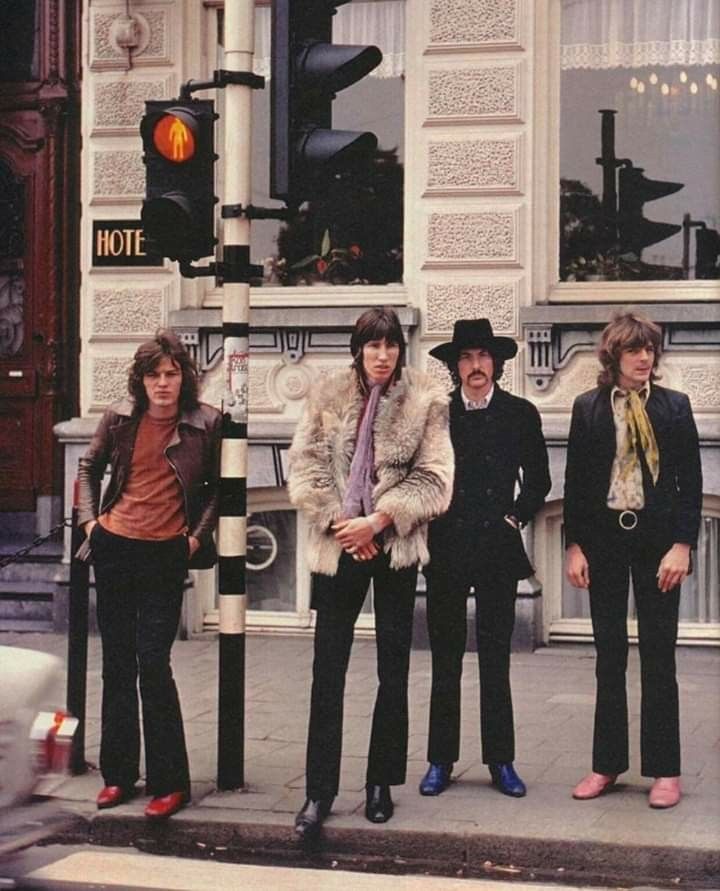
Roger Waters is less shy about sharing a personal opinion than a football pundit after a couple of pints.
His ethos is that too many people stay shtum and comfy when the world really should be put to rights. And that even pertains to the trivial pursuit of music. While some might call him cynical, the controversial Mr Waters is a man who would wager that not saying anything if it isn’t nice is for meek and mild lambs sure to be slaughtered.
At one time, Bob Dylan was the progenitor when it came to this on an artistic front. As one of Waters’ peers, Robert Plant, once explained: “Something happened when Dylan arrived. I had to grapple with what he was talking about.”
He continued, “His music referenced Woody Guthrie, Richard and Mimi Farina, Reverend Gary Davis, Dave Van Ronk and all these great American artists I knew nothing about.” Adding, “He was absorbing the details of America and bringing it out without any reservation at all, and ignited a social conscience that is spectacular.”
Plant concludes that ”Dylan was the first one to say: ‘Hello, reality’. I knew that I had to get rid of the winkle-pickers and get the sandals on quick.” However, in time, too many people thought of him as less of an artistic saviour and more of a social soldier, so when fans picketed his private residence and urged him to join them on the frontlines, Dylan gave up his protest style and veered more towards a broader sense of virtue.
Waters, meanwhile, clung to the latter. In an inverse of Dylan’s arc, Pink Floyd were initially, quite frankly, away with the fairies in a marmalade garden. But soon, he’d be tackling subjects like the loss of plausible political protest and change with the likes of ‘Another Brick in the Wall (Part 2)’.
Since then, he has been on the forefront of outspoken political opinion and embraced the slings and arrows that come with it. But Dylan was facing those when he was just a young vagabond, and as he sang himself, “I’m so much younger now.” And he reclaimed his youth, and shunned the voice of a generation tag, in favour of being the voice of his own lived experience and the art he loves.
This eventually ended up with Dylan simply putting out a cover album of old standards made famous by Frank Sinatra in 2015 with Shadows in the Night. Although Dylan quickly decreed, ”I don’t see myself as covering these songs in any way. They’ve been covered enough. Buried, as a matter a fact. What me and my band are basically doing is uncovering them. Lifting them out of the grave and bringing them into the light of day.”
However, Waters didn’t quite see it that way. The grovelling bassist said: ”I haven’t got time to do an album of Frank Sinatra covers like Bob Dylan, for instance, which is weird. You go, ‘Fuck me, Bob, what is wrong with you? Why would you do that?’ I guess it’s because he can’t bear the thought of not being on the road, and he couldn’t think of anything else to do. I can’t believe he really has an affinity for all that schlock. But maybe he does.”
While it is certainly true that Dylan desires the road as much as a weary trucker desires getting off it – even telling Pete Townshend, ”I’m a folk singer. A folk singer is only as good as his memory, and my memory is going,” implying to The Who guitarist that he tours to keep his memory alive – that soppier Sinatra-like side has always been a part of him too, right down to the more brutal expositions of love gone awry. As Waters’ old Pink Floyd bandmate turned nemesis, David Gilmour, told Desert Island Discs when championing ‘Ballad in Plain D’ as one of his favourite songs of all time: “I lived through a lot of his heavy protest stuff, and this was another side I’m very keen on. This sort of love song approach.”