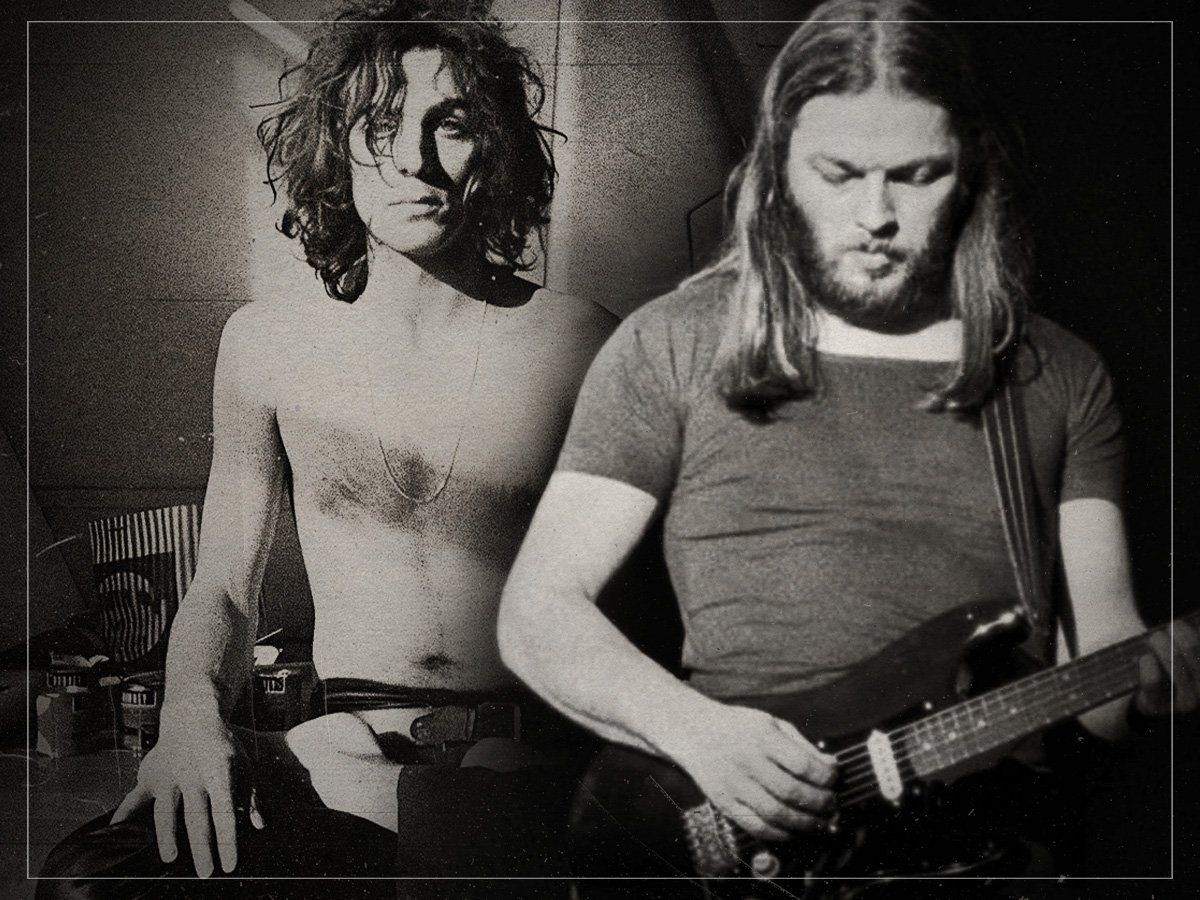
For the members of Pink Floyd, their feelings towards Syd Barrett are obviously complex. However, one thing that was never up for question or debate was his talent, and no matter how tricky the relationships got, no one would ever question that.
It was Barrett’s band, crafted entirely in his image. He started the group back in 1965, alongside Nick Mason, Roger Waters and Richard Wright. David Gilmour didn’t come into question until a few years later, and so at first, it was all about Barrett – his voice, his talent and his songwriting.
It was Barrett’s work that shaped the group. Made in the image of his trippy psychedelic world, his early compositions pointed them in the right direction. But then, as the singer spiralled into drug use and mental illness, he also became the thing threatening to throw them off course.
Barrett became unreliable, unable to truly contribute to the group, and so they were always in need of extra help. That’s where David Gilmour came into play, and that’s why, eventually, Gilmour simply took over. The story goes that one night, while on their way to a gig, they just didn’t pick Barrett up for it. They left him behind and that was that, Gilmour was now at the helm.
In hindsight, there was a lot of guilt attached to that action and the way the members treated Barrett. “I think looking back now, what’s rather sad is how little we understood or knew how to deal with it,” Nick Mason reflected years on, admitting that the group simply didn’t know what to do when mental health awareness at that time was so poor. Yet through it all, none of them would ever dare to diss Barrett’s talent.
“He was very clever, very intelligent, an artist in every way. And he was a frightening talent when it came to words, and lyrics,” Gilmour said about his old bandmate, “They just used to pour out.”
However, Gilmour was willing to admit that there is perhaps only one person who could match it. “The early Pink Floyd, under Syd’s tutelage, was quintessentially English, in the same way that Ray Davies is,” the artist said, putting their old bandmate on the same playing field as The Kinks’ leader as two artists that felt representative of their nature and reflective of it. To him, Barrett’s work was as defining of the UK at that time as Davies’ was.
Really, though, Barrett still won out in his eyes. “He was one of the most talented people and could have given a fantastic amount,” Gilmour said, adding without any doubt, “He really could write songs and if he had stayed right, could have beaten Ray Davies at his own game.”