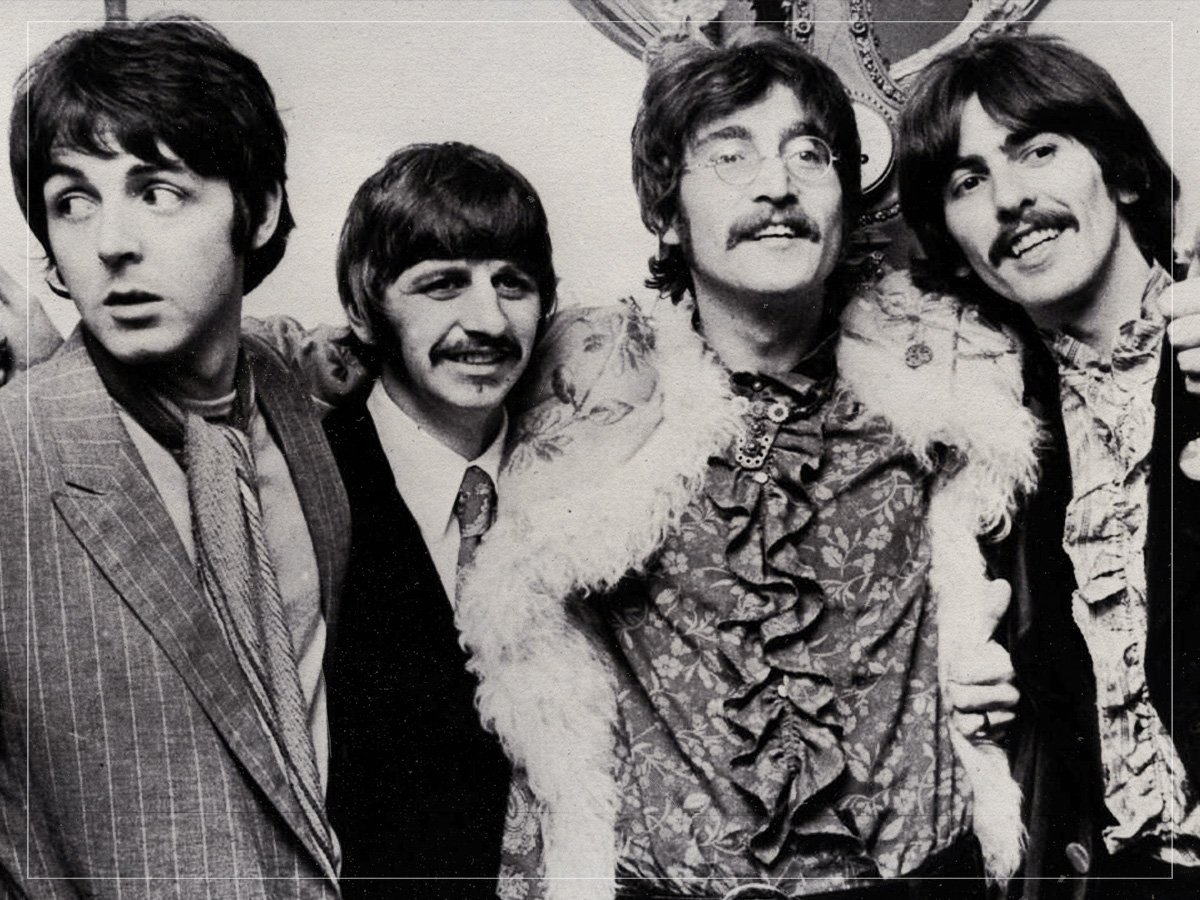
For The Beatles, the summer of love should have been entirely defined by the singular statement of Sgt Pepper’s Lonely Hearts Club Band, which was released in June of 1967 and would go on to transcend its own psychedelic era to become an all-time pop classic.
Instead, just a few months after the LSD-infused Sgt Pepper arrived in record shops, the media circus around the Fab Four had taken a bizarre and ultimately tragic turn.
Despite the important role The Beatles had played in further de-stigmatising the use of recreational drugs among youthful hippies from London to San Francisco, the band were already growing a bit tired of their role as hallucinogenic ambassadors, particularly as they were diving deeper into the alternative, drug-free version of mind expansion through transcendental mediation, as taught by their new hero, Maharishi Mahesh Yogi.
On August 25th, 1967, all four Beatles and their partners were booked to take a train from London to Bangor, Wales, where they’d be attending a seminar by the Maharishi, one expected to draw hundreds of young people who’d been newly turned on to TM by the band’s association with it. In the midst of a chaotic, crowded scene at Euston Station, John Lennon’s wife Cynthia got separated from the group and missed the train entirely—an ugly scenario that proved emblematic of where that relationship was headed.
When everyone finally reconvened in Bangor, it became clear that The Beatles would need to hold a press conference to explain why they were there and why they were joining the new Spiritual Regeneration Movement of Great Britain. That brief media event, on August 26th, 1967, turned into something of a surprising announcement from the band that they were also now collectively renouncing drugs, or at least that’s kind of the way it came across.

“LSD isn’t a real answer,” George Harrison told reporters. “It doesn’t give you anything. It enables you to see a lot of possibilities that you may have never noticed before, but it isn’t the answer… To get really high, you have to do it straight.”
“You cannot keep on taking drugs forever,” added Paul McCartney, who, in retrospect, was too preoccupied with rushing forward Sgt Pepper’s follow-up, Magical Mystery Tour. “We were looking for something more natural… We think we’re finding other ways of getting there.”
Meanwhile, Lennon gave the whole thing a predictable political angle. “Don’t believe that jazz about there’s nothing you can do, and ‘turn on and just drop out, man’,” he said. “Because you’ve got to turn on and drop in, or they’re going to drop all over you.”
At no point did any member of The Beatles actually state that they officially “renounced” drugs or opposed them on principle. The idea was more about adopting the Maharishi’s brand of mind expansion as the groovy new trend for ‘68.
One day after this press conference, on August 27th, 1967, The Beatles’ manager Brian Epstein was found dead in his London home at the age of 32. The news stunned the band and cut short their week in Bangor. The supposed drug renouncement, which made headlines for a day, was buried under news of Epstein’s death and whether it was linked to the larger “epidemic” of drug use in the culture.
The ‘Summer of Love’ was ending on a dark note, as The Beatles, trying to elevate themselves above the fray, were now without their original voice of reason.