When you were part of the biggest band of the decade – and, indeed, of all time – it’s perhaps easy to dismiss everyone else’s efforts at glory just as mere child’s play. Just ask George Harrison.
This is not to say that his pretences were meant to be entirely arrogant – or at least come across that way – but given the unbeatable success that The Beatles cultivated, you can easily see how its members may not have been so naively enamoured or inspired by the next big thing that came after them. At best, they were going to be fans of the band, so their own work didn’t really matter in comparison. At worst, they were a threat.
In this sense, up until a certain point, Harrison may not have had many industry heads he could lean on for advice outside the realms of his own band. However, as the Fab Four no longer became so fabulous, and increasingly started to fracture apart, he took the smart move to start looking further afield. This was not only what saved the rest of his career when the time came to begin going it solo, but also allowed him to stoke out the rest of the competition.
To Harrison’s mind, there wasn’t much to be scared of in that regard. Indeed, the reality was that by the time the late 1960s rolled around, there were very few other bands he actually liked, so the prospect of The Beatles breaking up and possibly being overtaken was perhaps not as stark as it might have been. But within the trenches, there was one other band that caught his eye – with a frontman in particular who would go on to take a particularly important role in the course of the rest of his life.
Recalling this time, Harrison told Rolling Stone back in 1979: “I never liked all that stuff in the late ‘60s after Cream had broken up – all those Les Paul guitars screaming and distorting. I like more subtlety – like Ry Cooder and Eric Clapton.”
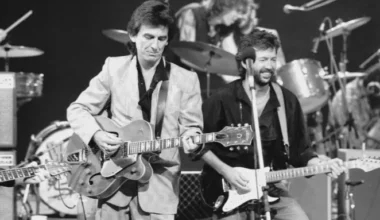
Indeed, perhaps aside from The Beatles themselves, Cream were the ones that everyone looked up to. But like himself, Harrison also sensed when Clapton wanted to fly free, and thus roped him into his gang.
Indeed, the Quiet Beatle could recognise a lot in common with his guitar-playing counterpart. “Eric is fantastic,” he continued. “He could blow all those people off the stage if he wanted to, but he’s more subtle than that. Sometimes it’s not what you do, it’s what you don’t do that counts.” That was evidently a motto that Harrison had lived with for a fair chunk of his fame; always understated, always the underdog. Only he knew the true power that held.
Perhaps it was this sense of relatability that pulled Harrison and Clapton together like magnets. They really did share a lot in common – not least a wife – but the musical collaboration they fostered beneath this managed to span the course of the scene, while also bridging it together. That’s one way of stoking out your rivals, you might suppose. Turn the person who should have been your enemy into one of your closest friends.