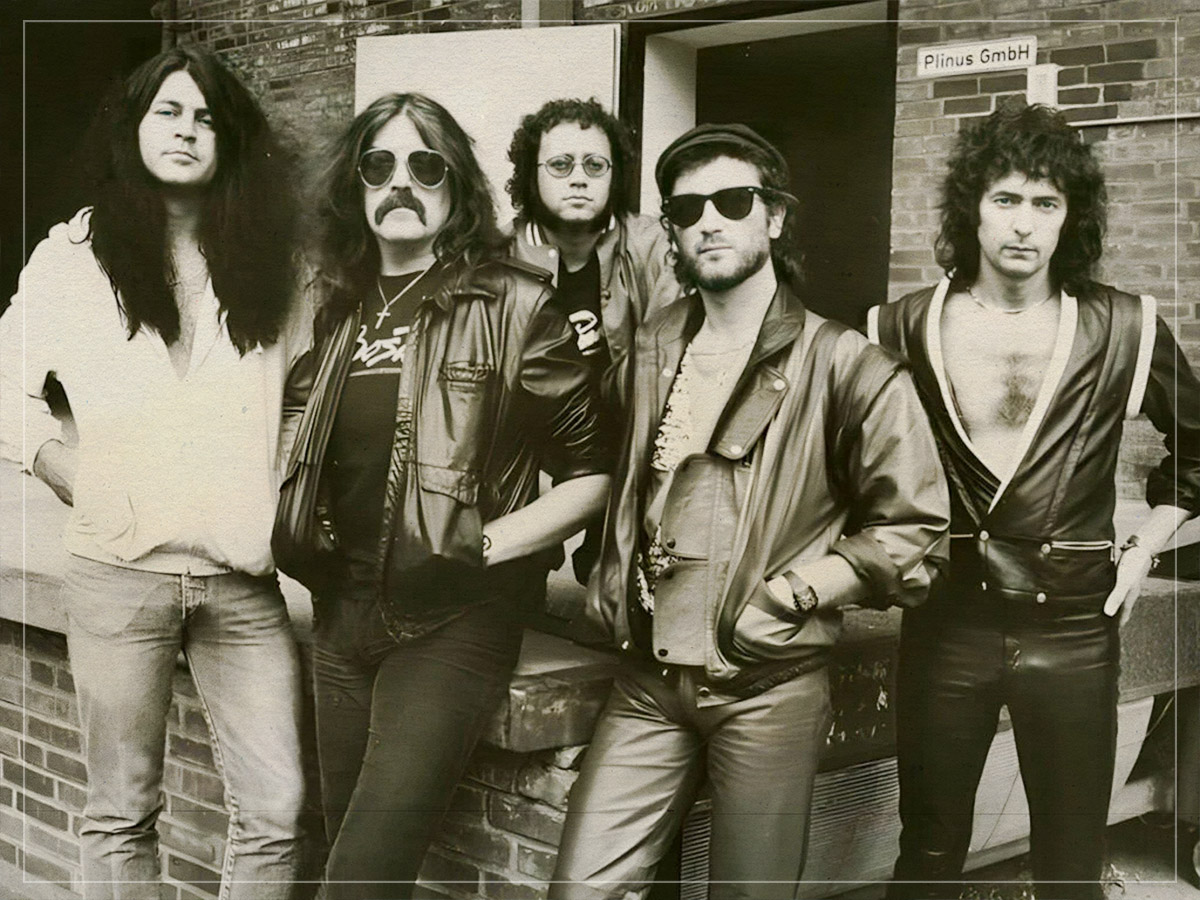
As much as they were one of the most formidable hard rock bands of their generation, Deep Purple haven’t been without patches of turbulence throughout their existence. The unrest has been so extreme that the band have been forced to refer to each different incarnation of the group as ‘Mark I’, ‘Mark II’ and so on, all the way through to their current ninth version, ‘Mark IX’.
It’s not so straightforward, though; there have been two reunions of ‘Mark II’, which is arguably seen as the classic lineup with Ian Gillan, Ritchie Blackmore, Roger Glover, Jon Lord and Ian Paice. While several members have come, gone, come back again and ousted others, Paice is now the only member to have remained in his role since the band formed in 1968, with no other drummers taking his slot.
This has led to periods where the direction and identity of the band haven’t seemed quite as strong, with David Coverdale’s tenure as frontman being an example of where the group was in a creative slump.
However, it’s not always possible to recruit the right personnel to replace the departing musicians in a band, and every time Ritchie Blackmore chose to leave the band, they were left with a gaping hole that they needed to fill wisely. While they were determined to get one major name in to replace him when he left for a second time in the early 1990s, they couldn’t manage to convince their ideal candidate to become a permanent part of the band.
As one of the most formidable instrumental guitarists in the world to have emerged in the 1980s, there was plenty of demand for Joe Satriani from the biggest rock acts in the world for his services. While he was more than thrilled and honoured that the band would ask him to provide emergency cover for the departing Blackmore during their tour of Japan in 1993, and later their European tour in 1994, he declined to become a part of the band on a permanent basis, and with good reason.
In a 2021 interview with Ultimate Classic Rock, he went into greater detail as to why he chose not to take the position as his own, despite deputising for over a year. “I was offended that [my manager] would ask me that, because I was such a fan of Richie Blackmore. Nobody can replace Ritchie Blackmore”. While he may have believed nobody could replace him, someone needed to, and by his own estimation, he wasn’t up to replacing his idol.
Steve Morse would eventually fill the vacant position after Satriani relieved himself of duty in 1994, and while his move was out of respect for Blackmore, he probably also understood that the inner politics of the band who have a constantly rotating carousel of members probably wouldn’t end up being kind to him in the long run. It would have been a radical move to get a guitarist like Satriani on board, and may have breathed a new lease of life into a group that was struggling to maintain its audience, but in the end, you have to respect his decision.