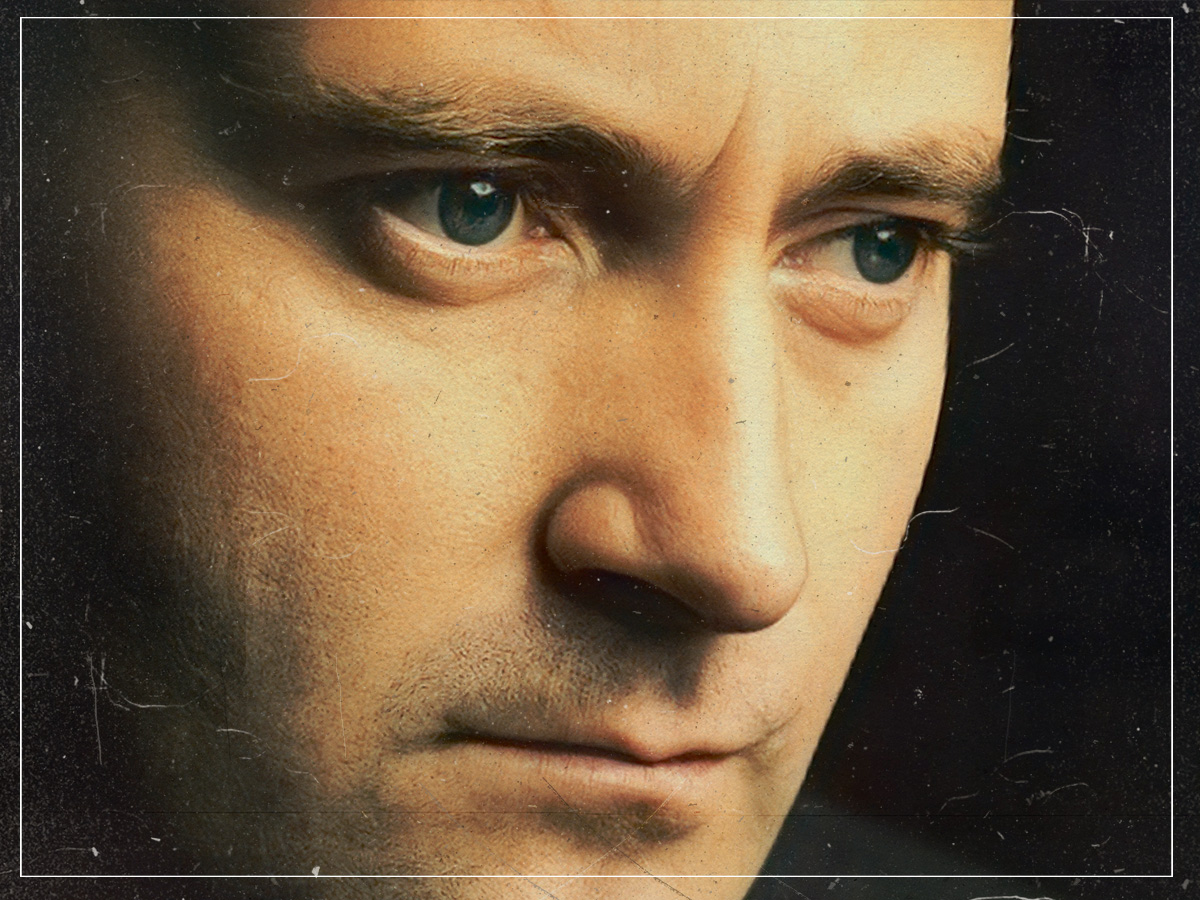
Phil Collins has a complicated relationship with his own heroes.
But not for the reasons you might expect. For instance, it’s not hard to find any of the countless names who inspired Collins’ genius, from The Action to Billy Cobham and the Mahavishnu Orchestra. But instead of imitating the greats, Collins inadvertently learned what he was not to do. As a musician, he realised it wasn’t about trying to become someone else, but letting those notes of excellence guide him.
As he once said of Cobham, “Their style of playing odd time signatures and complex rhythmic figures influenced our music. Personally speaking, I feel I was trying to do a little too much on those early albums [Foxtrot, Selling England by the Pound and Nursery Cryme]. I was trying to prove to people that I could play. In doing so, I wasn’t necessarily playing what the music required.”
Thus, whenever you come across Collins praising the work of someone else in an interview, it’s interesting to try to figure out the fragments of them he’s peppered in his own art along the way, versus the ones he’s simply admired, allowing to thrive as perfect versions of something else, rather than reclaimed pieces of his own artistic museum. Like when he explains how much he admires Eric Clapton, but never actually tried to emulate any of his style.
While it’s easier to observe that on the surface level without actually knowing the inner workings of Collins’ mind and the more ambiguous or nuanced ways others have impacted or shaped his own style or sound, some are more glaring than others, like how, although he branched off into his own thing, bands like The Beatles and various other jazz players wound up being crucial pieces to the puzzle – that distinctive Collins sound that’s hard to place in any other category.
But this becomes more sticky territory when assessing his favourite songwriters. During a particularly insufferable moment on The Howard Stern Show, when Stern’s gruelling line of questioning attempted to push Collins into a corner and get him to say something provocative about one of his favourite all-time drummers, Ringo Starr, the musician turned to other songwriters he feels should be given more credit.
“People that write songs that I actually wish that I could write; Stephen Bishop writes wonderful songs. Paul Brady is an Irish songwriter, he writes songs I wish I could write. John Martyn’s a Scottish songwriter,” he said. When Stern interrupted with a cocksure, “I’ve never heard of him,” Collins quipped back, “I know, this is why I’m talking to you about him, because people should hear about him. These guys are unsung heroes.”
This is where Collins’ influences become more clearcut – rather than steering away in his own direction or leaving them be because he simply believes he’s not equipped to deliver the same level of talent, Bishop, Brady and Martyn can be detected pulsating through the various lines of Collins’ own songwriting ability, in the more subtle, delicate moments where the lyrics venture deeper than the immediate appeal of the melodies themselves.
While it’s unlikely to find any moments where he directly borrowed from them, it’s easier to observe the ways he absorbed many of the same qualities, like how some of them write from a place of emotional versatility or vulnerability. These elements fed through from the core of the songs and out into more expansive spaces, where it’s about implication, vagueness, and the power of no one set meaning.