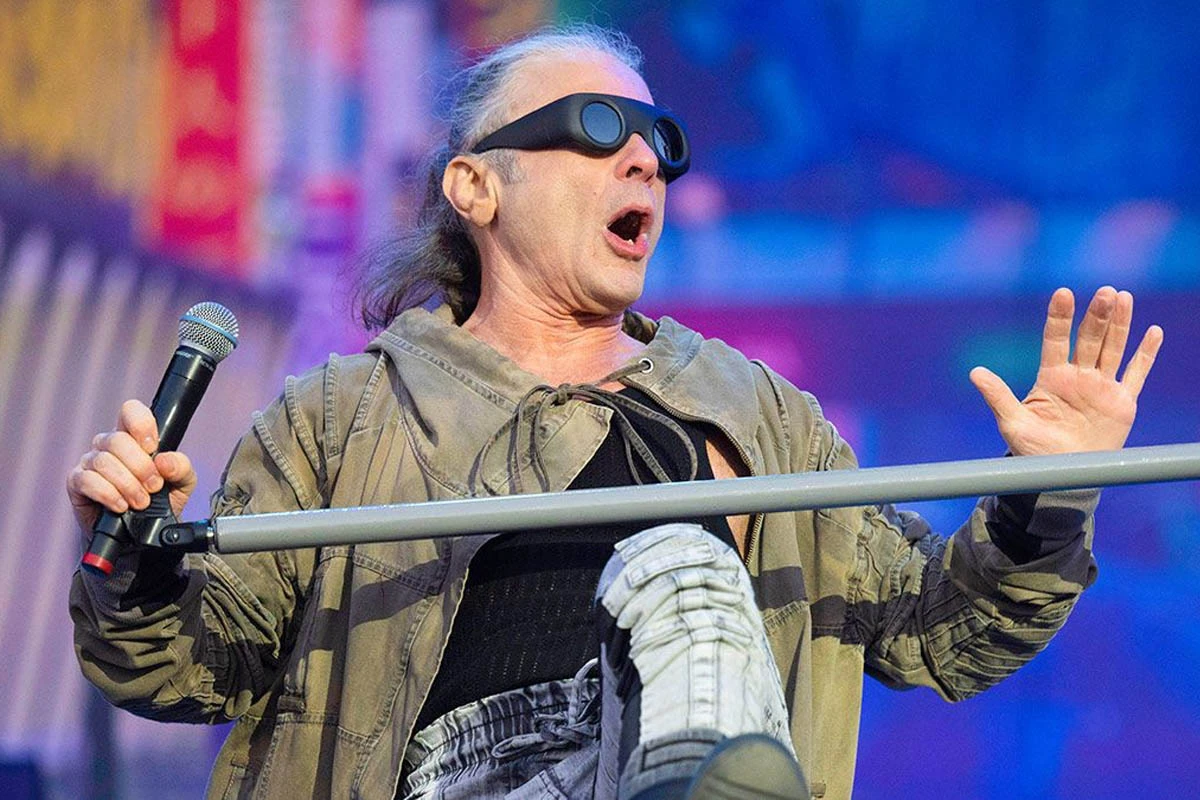
Iron Maiden’s longtime manager Rod Smallwood has revealed how a stage accident involving frontman Bruce Dickinson at Rock In Rio became a pivotal moment in the band’s South American success. Louder Sound reported his comments.
Smallwood’s comments detailed the circumstances surrounding the legendary 1985 performance. He explained how a bloody stage incident was strategically used to maximize the band’s exposure.
“As a one-off gig, the impact of Rock In Rio was monumental,” Smallwood said. “We had no history at all in South America before then. We played before Queen, and the audience was reportedly 300,000 – but it could have been more. And it was broadcast live on TV. Not just in Brazil, but across all of South America.”
The manager then described how technical difficulties led to the infamous incident that would define the performance.
“The sound was pretty bad on stage,” he continued. “Bruce got so frustrated that he kicked off some of the monitors. And that’s when he ran into a guitar head and cut himself. The blood was streaming down his face. I was on the side of the stage, and Bruce came over to me. I said, ‘See the camera over there with a red light on? Go and get your head right in front of it!’ Bruce tells a different version of that story where I sent a roadie up to him to tell him to make the wound a bit wider so he bled more!”
Smallwood emphasized the lasting impact of that dramatic moment on Iron Maiden’s career in South America.
“The sight of Bruce’s bloody face had a huge impact,” he said. “After that one show, we were playing to a minimum of 40,000 people a night in South America – forever, effectively. So it’s one of the most important shows we ever did.”
This incident occurred during what would become one of the most significant rock festivals in history. It cemented Iron Maiden’s place in music folklore.
YouTube documentation revealed that the Rock In Rio performance holds the record for being the concert with the biggest live attendance in Iron Maiden’s entire career. The massive scale of the event contributed to the dramatic impact of Dickinson’s bloody performance. Hundreds of thousands of fans witnessed the moment that would define the band’s relationship with South American audiences.
The 1985 Rock in Rio festival itself was a groundbreaking event that transformed Brazil’s music landscape. Culture Sonar documented that the festival drew an estimated 1.3 million people over 10 days. It featured a diverse lineup ranging from Queen to AC/DC. This massive gathering highlighted how pivotal the event was not only for Iron Maiden but for establishing Brazil as a major destination for international rock music.
Iron Maiden’s ability to turn onstage accidents into memorable moments has become a hallmark of their live performances throughout their career. WMGK reported that during a recent European tour, another freak accident occurred when Dickinson struck a large gong behind drummer Nicko McBrain. The gong fell and hit McBrain, who continued performing unfazed.
The Rock In Rio incident established a template for how the band would handle unexpected moments during live shows. This resilience and ability to capitalize on dramatic situations has contributed significantly to Iron Maiden’s legendary status in the heavy metal world. This approach particularly resonates in markets where theatrical performance elements connect strongly with audiences.